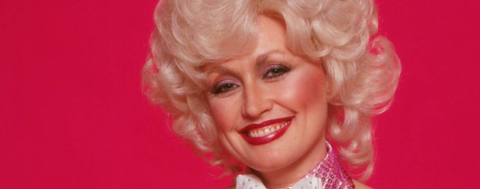

The Queen of Country: Dolly Parton
Dolly Parton: An Extraordinary Career
In the 1960s and 1970s, Dolly Rebecca Parton, along with her pioneering colleagues Loretta Lynn and Tammy Wynette, revolutionized the world of country music for female singers.
Then, Dolly propelled her career even further by moving into the pop world, gracing the cover of Rolling Stone, scoring numerous pop hits and starring in a series of Hollywood films.🎬

But along the way, she ended up losing much of her country audience, to the point that in 1997, she dissolved her fan club, which was one of the most loyal in country music. But Dolly's career and her love for hardcore country fans were far from over.
Starting in 1999, she returned to the music of her youth and began rebuilding a traditional fan base with a series of critically acclaimed bluegrass albums.

The Dolly Parton Family
Dolly Parton was born into a large family, the fourth of twelve children, on January 19, 1946, in Locust Ridge, Tennessee. She comes from the depths of the Appalachians, where music is an integral part of the lives of those who, like the Partons, struggle to make a living.
Her mother was a singer who taught music at Dolly's parish as well as the Elizabethan ballads her ancestors brought to America.
Dolly's grandfather was a preaching fiddler who wrote "Singing His Praise", which was recorded by Kitty Wells.🎻
Several of Dolly's eleven siblings have been active in music, and some worked for a time in the family band.
Photo below of Dolly in 1955 when she was only 9 years old.

Dolly Parton: Her Beginnings
Dolly's childhood was marked by her desire to escape her situation and by the many honest and unromantic songs she wrote about her experience and life in the Appalachians.
For example, "Coat of Many Colors" (#4, 1971) is a direct account of a traumatic experience she had at school, when her classmates mocked her handmade patchwork coat.
Dolly was encouraged in her efforts to make music by her uncle Bill Owens, who gave her a guitar. He managed to get her to participate at the age of ten in a variety show on television in the nearest big city, Knoxville.🎸
Nashville notices her very quickly, and she makes her first appearance on the Grand Ole Opry at the age of thirteen in 1959. She also records a single for a small Louisiana label, and another for Mercury Records in Nashville in 1962.
Parton is not discouraged by the lack of success of her first recordings, so much so that in 1964, she packs her bags and leaves for Nashville immediately after graduating from high school.

The Fairy Tale of Dolly Parton
From her first day in town, she met her future husband, entrepreneur Carl Dean, in a laundromat.
Her music career quickly evolved; people began to notice her as a songwriter, especially after a pair of songs she wrote with Bill Owens became one of Bill Phillips' top ten hits in 1966.
She then recorded for Fred Foster's Monument Records from 1965 to 1967, with "Dumb Blonde" - which tackles traditional female stereotypes - becoming her first Top 40 hit.👩🏼
The turning point in Dolly's career came in 1967, in the form of a phone call from the TV series The Porter Wagoner Show. Wagoner, a traditional country singer with a flashy style, was looking to replace his duet partner Norma Jean.

As a team, Wagoner and Dolly immediately became audience favorites (photo above in 1967). Her hourglass figure, scandalous outfits, and angelic voice perfectly contrasted with Wagoner's folksy humor and old-fashioned country sensibility.
RCA Records signed Dolly as Wagoner's duet partner and as a solo artist. She experienced growing success in both roles and soon began to eclipse the show's own star.
From My Tennessee Mountain Home to Jolene
In hindsight, the period from the early to mid-70s was the most creatively rich of Dolly's country music career.
Dolly's first solo hit is her composition "Joshua" (1970-1971), subsequently leading to three more number ones in 1974 with the famous songs:
- "Jolene"
- "Love Is Like a Butterfly"
- "I Will Always Love You".
The latter is the true farewell to her partner Wagoner, which became painfully clear to her when she left his TV show that year.
Moreover, 1973 gave birth to what is considered by some as her album closest to perfection, My Tennessee Mountain Home. It is a bittersweet look at a life and tradition she was determined to leave behind.

The cover (above) is a photo of the cabin where she grew up in Sevierville. The songs are a vibrant tribute to a people and a way of life that is disappearing. "I wanted to be free", she said to Rolling Stone magazine in 1977. "I had my songs to sing, I had an ambition and it burned inside me. I knew it would get me out of the mountains. I knew I could see worlds beyond the Smoky Mountains."
She was voted Female Vocalist of the Year by the Country Music Association (CMA) in 1975 and 1976.🏆

Birth of Country Pop
Dolly’s new life was turning beyond Nashville and increasingly toward Hollywood. Her first album after gaining independence from Wagoner was 1977’s New Harvest, First Gathering, which yielded the No. 11 single "Light of a Clear Blue Morning."
That same year, she released the album Here You Come Again, a brilliant and successful attempt at blending country and pop. The CMA named her "Entertainer of the Year" in 1978, and it seemed Dolly could combine the best of both worlds.

Songs, Films, and Dollywood
Dolly’s country career became difficult afterward, even though her name became a household word and she was constantly present on television channels, appearing on talk shows, specials, and a brief eponymous series in 1976.

Her film career ranged from brilliant with the comedy 9 to 5 to unforgettable with another comedy. The 1984 film Rhinestone attempted to make Sylvester Stallone a credible country singer.
Among her recording triumphs are the 1987 Trio album with Emmylou Harris and Linda Ronstadt and the 1993 collaboration with the Honky Tonk Angels featuring Loretta Lynn and Tammy Wynette.
In 1992, singer Whitney Houston recorded Dolly’s "I Will Always Love You", which became a major pop hit, partly due to its inclusion in the soundtrack of the film The Bodyguard.
Dolly has also shown her business acumen in several ventures, including the Dollywood theme park in East Tennessee, near Sevierville. In 1985, with other investors, she opened the park, which has become one of the South’s premier tourist attractions.🎢

Thanks to Dollywood and the Dollywood Foundation, a nonprofit organization, Dolly has contributed in many ways to the economy of her county and to scholarship programs for high school students in that county. Her Imagination Library, which offers a free book each month to children from birth to age five, has distributed over 100 million books and has expanded from East Tennessee to cities across the United States, as well as to England and Australia.
She also supports the Dolly Parton Center for Women's Services in Sevierville. A life-size statue of Parton now stands on the lawn of the Sevier County courthouse.
In 1996, Dolly recorded Treasures, an album of her favorite songs (other than her own), for the new Nashville label, Rising Tide Entertainment. The album was a critical success but did not achieve commercial success.
That same year, she and Vince Gill won the AMC Vocal Event of the Year award for their duet recording of "I Will Always Love You." Dolly, Harris, and Ronstadt again joined forces for Trio II, and the supergroup's rendition of Neil Young's "After the Gold Rush" won a 1999 Grammy Award for Best Country Collaboration with Vocals.

In 1999, Dolly Parton was inducted into the Country Music Hall of Fame, the pantheon of country music artists.💽
That year, Dolly also came full circle with the music she heard growing up. She released her first bluegrass album for Sugar Hill, The Grass Is Blue. It was named Album of the Year by the International Bluegrass Music Association (IBMA) and won a Grammy Award for Best Bluegrass Album.
Two other bluegrass albums followed, Little Sparrow (2001) and Halos and Horns (2002).
In 2003, Sugar Hill released Just Because I'm a Woman: Songs of Dolly Parton, a tribute album featuring tracks by Norah Jones, Sinead O'Connor, Alison Krauss, and Shania Twain, among others.
Dolly Parton: Awards and Honors
- 1984: her star on the Hollywood Walk of Fame
- 2004: the Living Legend Award for her contribution to the cultural landscape of the United States, awarded by the Library of Congress
- 2005: the National Medal of Arts, the highest award given to artists by the U.S. government.
- 2006: the prestigious Kennedy Center Honors.

The exceptional life of more than 50 years of career of the Queen of Country cannot, of course, be summarized in just a few hundred lines. We will soon dedicate other articles dealing more extensively with very specific periods of her life.