
How to dress like a cowboy?
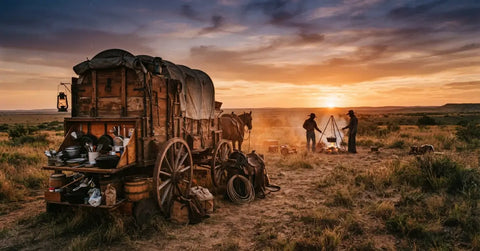
When cowboys are mentioned, one image immediately comes to mind: that of the 19th-century American West rider, hat firmly on his head and lasso in hand. This representation is not wrong, but it tells only part of the story. Behind every piece of western attire lies a specific function: chaps protected against brush, spurs were used to communicate with the horse, and jeans could withstand entire days in the saddle.
Today, dressing in western style is no longer a necessity but a real pleasure — and above all, a style that never goes out of fashion. Long confined to the southern and western states of the United States, it has since spread around the world, and now appeals to a growing French audience, from country festivals to fashion runways. Holidays, a themed wedding, a country evening or simply wanting to stand out in everyday life: here's everything you need to know to adopt the cowboy look without any missteps.
The foundations of western style: where this look comes from
Western clothing, worn by both men and women, became popular from the 19th century onward in the American Far West. It was worn by pioneers, mountain trappers, Civil War soldiers and, of course, cowboys.
The general public discovered this style through film and television. The trend truly took off in the United States thanks to singing cowboys such as Gene Autry and Roy Rogers in the 1940s and 1950s, who transformed workwear into stage costumes.
Good news: adopting cowboy style is easy. Two principles are enough — prioritize comfortable, durable clothing and stay consistent in your materials and colors. Natural shades (brown, beige, camel, black, off-white) form the foundation of any successful western wardrobe.

The western shirt: the signature piece
The shirt is undoubtedly the most recognizable element of the outfit, after the boots and hat. It stands out through several characteristic details:
Decorative yokes. The famous embroidered “yokes” on the shoulders and back, often pointed, are the hallmark of the Western shirt.
Snap buttons. Introduced over the decades, they replaced traditional buttons: they are quicker to open and, above all, give way without tearing the fabric if the shirt catches on a horn or branch.
Fabrics and patterns. Denim, tartan, gingham, and heavyweight cotton dominate. Long sleeves remain the norm, including in summer, to protect against the sun.
For jackets, for both men and women, suede fringe was a classic of the late 19th century. Annie Oakley, the famous sharpshooter, often appeared in a fringed jacket during her performances in Buffalo Bill's Wild West Show.
As for the poncho, popularized in the 1960s by Clint Eastwood in the role of the Man with No Name, it remains a statement piece but is considerably harder to wear every day—best reserved for very distinctive outfits.
Jeans: the cowboy's iconic trousers
At the beginning of the 19th century, cowboys mainly wore wool trousers, switching to canvas models when the weather warmed up. Everything changed after the gold rush of the 1840s: miners adopted denim overalls for their exceptional durability. Levi Strauss took inspiration from them and created reinforced denim trousers, which ranchers and cowboys adopted in the early 1870s.
More than 150 years later, jeans remain the quintessential Western trousers. Here are a few guidelines for choosing the right pair:
The cut. Opt for a straight or slightly bootcut fit: it is the only one that allows you to wear the bottom of the trousers over the shaft of the boots without the fabric riding up.
The length. Western jeans are generally worn long, with a slight break over the boot. If they are too short, the result looks unbalanced.
The color. Dark raw denim looks dressier (ideal for a wedding or an evening out), while light-wash denim remains more casual.
For women, the story is a little different. At the end of the 19th century, women in the West wore prairie skirts, red gingham dresses, or fringed suede skirts inspired by Native American clothing. It was mainly after the Second World War that they widely adopted jeans, which were more durable and better suited to an active lifestyle. Today, raw denim, a button-down shirt, and boots make up the winning trio for a cowgirl look.
Cowboy boots: the essential staple
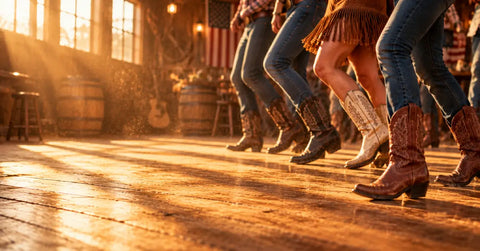
Say “cowboy,” and the image of cowboy boots immediately comes to mind. Yet they were not always the footwear of choice: until the 1860s, Wellington boots were dominant in Western communities. The trend then shifted toward a boot with a Cuban heel, a round or pointed toe, and a tall shaft—the silhouette we know today.
Every detail has a purpose: the angled heel prevents the foot from sliding through the stirrup, the tall shaft protects the calf, and the lack of laces makes the boot quick to remove in case of a fall. Some models feature spurs attached to the back of the heel, used to give the horse subtle signals.
Cowhide remains the standard material, but boots are also available in exotic leathers: alligator, buffalo, elk, and ostrich. Today, ranch workers, country singers, rock stars, actors, and even presidents wear them—because no other footwear provides such an instantly recognizable look.
Sizing advice: a cowboy boot should feel slightly firm over the instep and allow the heel to slip a little (about 5 mm) during the first few days. This movement disappears once the leather has molded to your foot.

The cowboy hat: the finishing touch
No western outfit is truly complete without a hat. It is the piece that defines the silhouette and makes the style instantly recognizable.
Felt or straw? Felt is the choice from autumn through spring and for all formal occasions: it holds its shape and creates a more polished look. Straw, lighter and more breathable, is made for summer and the outdoors.
Color. Black and dark brown are the most versatile and dressiest. Tan, sand, and off-white tones suit casual outfits and summery settings.
Shape. The “cattleman” crown, with its brim slightly turned up at the sides, remains the easiest to wear and goes with almost any outfit.
Size. Measure your head circumference rather than relying on approximate size conversions. A hat should fit without being tight or leaving a mark on your forehead.
Want to take things further? Browse our selection of cowboy hats for men, women, and children.
The western belt and its buckle
It's the detail that takes an ordinary outfit into Western territory. Western leather belts are worn wide (3.5 to 4 cm), often made of full-grain leather that is tooled, engraved, or hand-stamped.
The ornamental belt buckle is a statement piece in its own right. Historically, large buckles were awarded as trophies at rodeos—hence their imposing size and intricate designs (horses, eagles, longhorns, floral motifs). Today, choose them like jewelry: one statement piece is enough, without overwhelming the rest of the outfit.
Golden rule: the buckle's metal should match the other metal finishes (bolo tie, jewelry, boot eyelets). Silver with silver, gold with gold.
The accessories that make the difference
The bandana. Worn around the neck, it was used to filter dust kicked up by livestock. Tied simply, it now adds a welcome touch of color.
The bolo tie. This Texas-style tie with a cord and decorative clasp is the ideal way to dress up a Western shirt without resorting to a traditional tie.
Chaps. These leather protections worn over trousers protected riders' legs from cacti, brush, and ropes. Reserve them for riding or rodeo outfits—they look too much like a costume in the city.
The gloves and vest. A leather or suede vest adds a layer of texture and structures the silhouette, particularly for a wedding or an evening event.

Adapting Western style for everyday wear
The key is to strike the right balance. Wearing the entire outfit quickly creates a costume-like effect; choosing two or three pieces is enough to create a convincing Western look.
The casual look. Straight-leg raw denim, solid-color T-shirt, cowboy boots. Just one distinctive Western piece, and the silhouette speaks for itself.
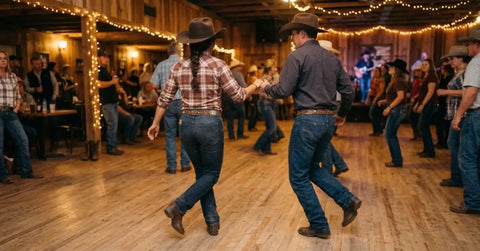
The shirt look. Western shirt with yokes tucked into jeans, leather belt with an ornate buckle, matching boots. The classic trio, perfect for a country evening.
The dressy look. Solid-color shirt, structured vest or jacket, dark raw denim, polished boots, felt hat. This is the version that works for a Western-themed wedding or a country event.
Mistakes to avoid
Wearing everything at once. Hat, fringed shirt, bolo tie, chaps, and spurs: that is a Halloween costume, not a style.
Mixing metals. A silver buckle with gold jewelry immediately disrupts the harmony of the outfit.
Tucking jeans into boots. Except in an equestrian setting, jeans should be worn over the shaft.
Neglecting leather care. Boots and belts need to be cleaned and conditioned regularly. Dry, cracked leather ruins the desired effect, no matter how beautiful the piece was originally.
Choosing spurs for the city. They serve a specific purpose in the saddle—worn every day, they look like a costume accessory.
FAQ: dressing in Western style
Can you wear cowboy boots every day? Yes, absolutely. Paired with straight-leg jeans and a simple top, they blend into an everyday outfit without looking like a costume. It is even the most natural way to embrace Western style.
How do you know whether jeans work well with cowboy boots? The cut should be straight or bootcut, and long enough to fall over the shaft of the boot. Slim or overly short jeans ride up when walking and disrupt the line of the leg.
Do you need a hat to achieve a Western look? No, but it is the piece that makes the style most immediately recognizable. Without a hat, rely on boots and a belt with an elaborate buckle to set the tone.
What is the difference between a felt hat and a straw hat? Felt is more formal, holds its shape better, and is suitable from autumn through spring. Straw is lightweight and breathable, ideal for summer and outdoor events.
Does Western style work for women too? Of course. Raw denim or a mid-length full skirt, a button-down shirt or fringed jacket, cowboy boots, and a defined waist belt: Western clothing is one of the most versatile styles there is.
How do you care for leather cowboy boots? Brush them after each wear to remove dust, clean them with a suitable soap, then apply a nourishing balm two or three times a year. Let them air-dry, never near a heat source.
All you’re missing is the piece that completes the look: discover our selection of cowboy hats to create an authentic Western look.